

Choosing the right bolt is essential for building safe, reliable, and durable mechanical connections. While many bolts look similar, differences in thread type, strength grade, and material can significantly affect fastening performance.
Whether you’re maintaining industrial equipment, assembling machinery, or sourcing fasteners for production, understanding these basics will help you select the right bolt for the job while reducing maintenance issues and improving equipment reliability.
Bolt Thread Types: Coarse vs. Fine
One of the first things to consider when selecting a bolt is the thread type. The two most common options are coarse threads and fine threads, each designed for different applications.
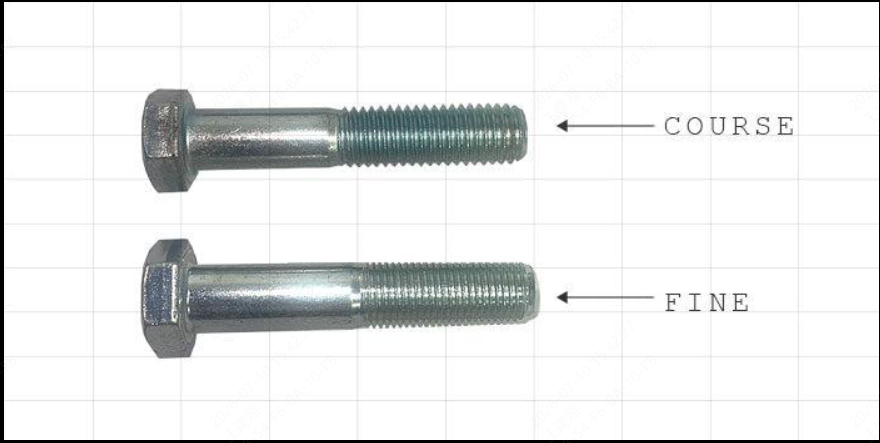
Coarse-thread bolts have a larger thread pitch, making them easier to install and less likely to suffer thread damage during assembly.
They are ideal for:
- General industrial equipment
- Structural steel
- Cast iron components
- Routine maintenance
Because they install quickly and perform well in most applications, coarse threads are the standard choice for everyday industrial fastening.
Fine-thread bolts have more threads over the same length, providing greater clamping precision and improved resistance to vibration.
They are commonly used in:
- Precision machinery
- Automotive applications
- Hydraulic systems
- Equipment exposed to continuous vibration
When vibration resistance is important, fine threads are often the better option.
Metric vs. Imperial Threads
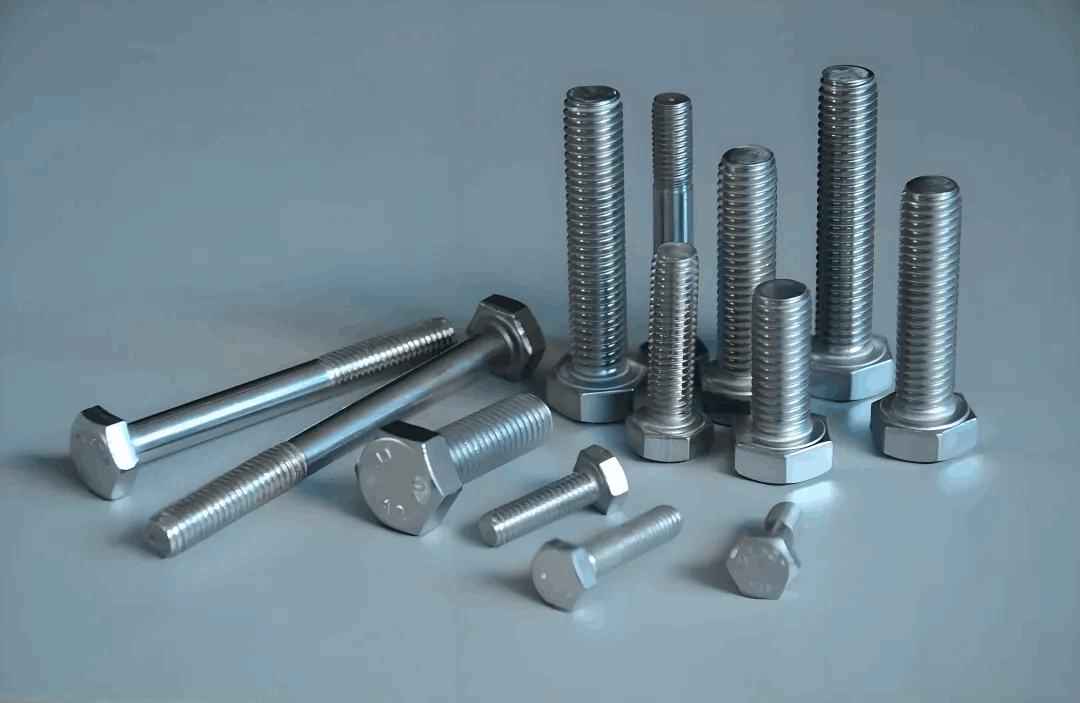
Another important consideration is thread standard.
Metric fasteners are identified by designations such as M6, M8, and M10, while imperial fasteners use inch sizes such as 1/4″ and 3/8″.
Although some sizes appear similar, metric and imperial threads are not interchangeable. Mixing them can damage both the bolt and the mating component, resulting in costly repairs.
Understanding Bolt Strength Grades
The numbers stamped on a bolt head—such as 4.8, 8.8, 10.9, and 12.9—indicate its property class, which defines the bolt’s mechanical strength according to international standards.
For example, a Class 8.8 bolt has:
- Minimum tensile strength of 800 MPa
- Yield strength equal to 80%of its tensile strength
In general:
| Property Class | Typical Applications |
| 4.8 | Light-duty fastening, covers, panels |
| 8.8 | General industrial machinery and equipment |
| 10.9 | Heavy machinery and structural applications |
| 12.9 | High-load and high-performance equipment |
A higher strength grade does not automatically mean a better choice. The correct grade should always match the application’s load requirements and engineering specifications.
How to Choose the Right Bolt
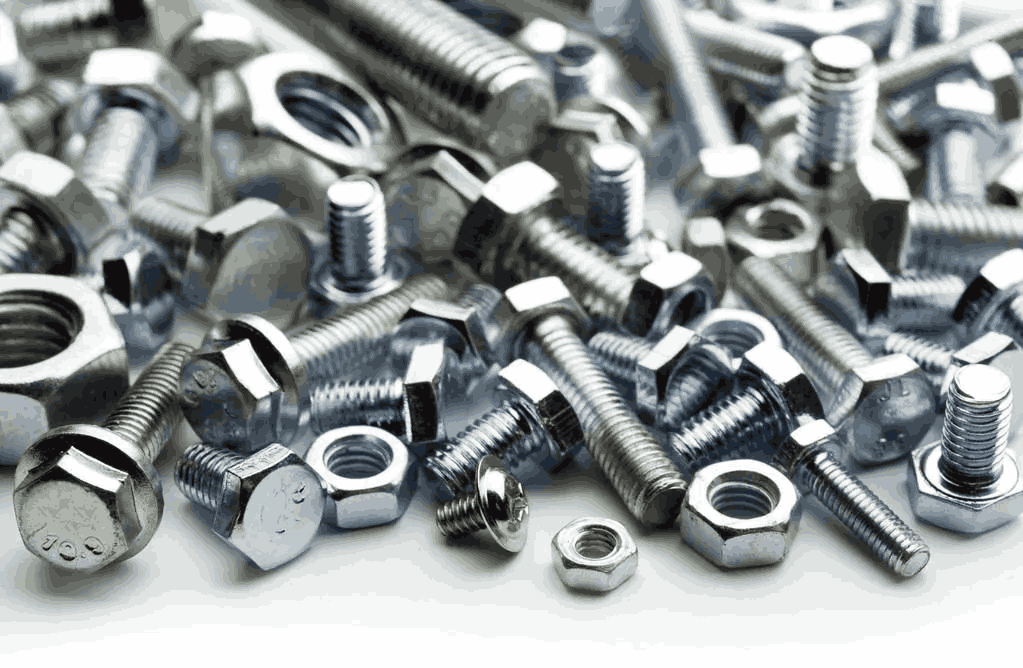
Choosing the right bolt starts with understanding where and how it will be used.
Match the Thread Type to the Application
For most industrial equipment and structural connections, coarse threads provide reliable performance and easy installation.
For machinery subject to vibration or requiring greater tightening precision, fine threads offer better resistance to loosening.
Select the Appropriate Strength Grade
As a practical guideline:
- General equipment assembly:Class 8.8
- Heavy-duty machinery:Class 10.9 or higher
- Light-duty fastening:Class 4.8
Selecting an unnecessarily high-strength bolt may increase costs without improving overall performance.
Consider the Material and Environment
Environmental conditions are just as important as mechanical strength.
- Use stainless steel boltsin humid or corrosive environments.
- Choose galvanized fastenersfor outdoor applications requiring additional corrosion protection.
- For elevated temperatures, select fasteners specifically designed for high-temperature service.
Proper material selection helps extend service life and reduce maintenance costs.
Common Bolt Selection Mistakes
Avoiding these common mistakes can improve fastening reliability and equipment safety.
Mixing Metric and Imperial Threads
Even if the diameters seem similar, incompatible thread standards can permanently damage threaded components.
Choosing Strength Based Only on Size
Two bolts of the same size may have completely different load capacities. Always verify the property class before installation.
Ignoring Environmental Conditions
Corrosion, moisture, chemicals, and high temperatures all affect fastener performance. Selecting the right material is essential for long-term reliability.
Using Incorrect Tightening Torque
Both under-tightening and over-tightening can lead to joint failure. For critical applications, always follow the manufacturer’s recommended torque specifications.
Quick Bolt Selection Checklist
Before selecting a bolt, confirm the following:
- Thread type (coarse or fine) ✔
- Thread standard (metric or imperial) ✔
- Strength grade ✔
- Material compatibility ✔
- Operating environment ✔
- Correct tightening torque ✔
Taking a few moments to verify these factors can help prevent equipment failures and improve long-term performance.
Conclusion
Selecting the right bolt involves more than choosing the correct size. Thread type, strength grade, material, and operating environment all contribute to a secure and reliable fastening solution.
By understanding these key factors, engineers, maintenance professionals, and procurement teams can make better purchasing decisions while improving equipment reliability and reducing maintenance costs.
Find the Right Fasteners at LCSC MRO
LCSC MRO offers a comprehensive selection of industrial fasteners, including hex bolts, socket head cap screws, stainless steel fasteners, high-strength bolts, nuts, washers, and fastening accessories for manufacturing, maintenance, and repair applications.
Whether you need standard fasteners or customized solutions, our team is ready to help. We also provide custom manufacturing and sourcing services for non-standard dimensions, special materials, and application-specific requirements.
Explore our complete range of industrial fasteners or contact us to discuss your custom project.
Some images are sourced online. Please contact us for removal if any copyright concerns arise.